
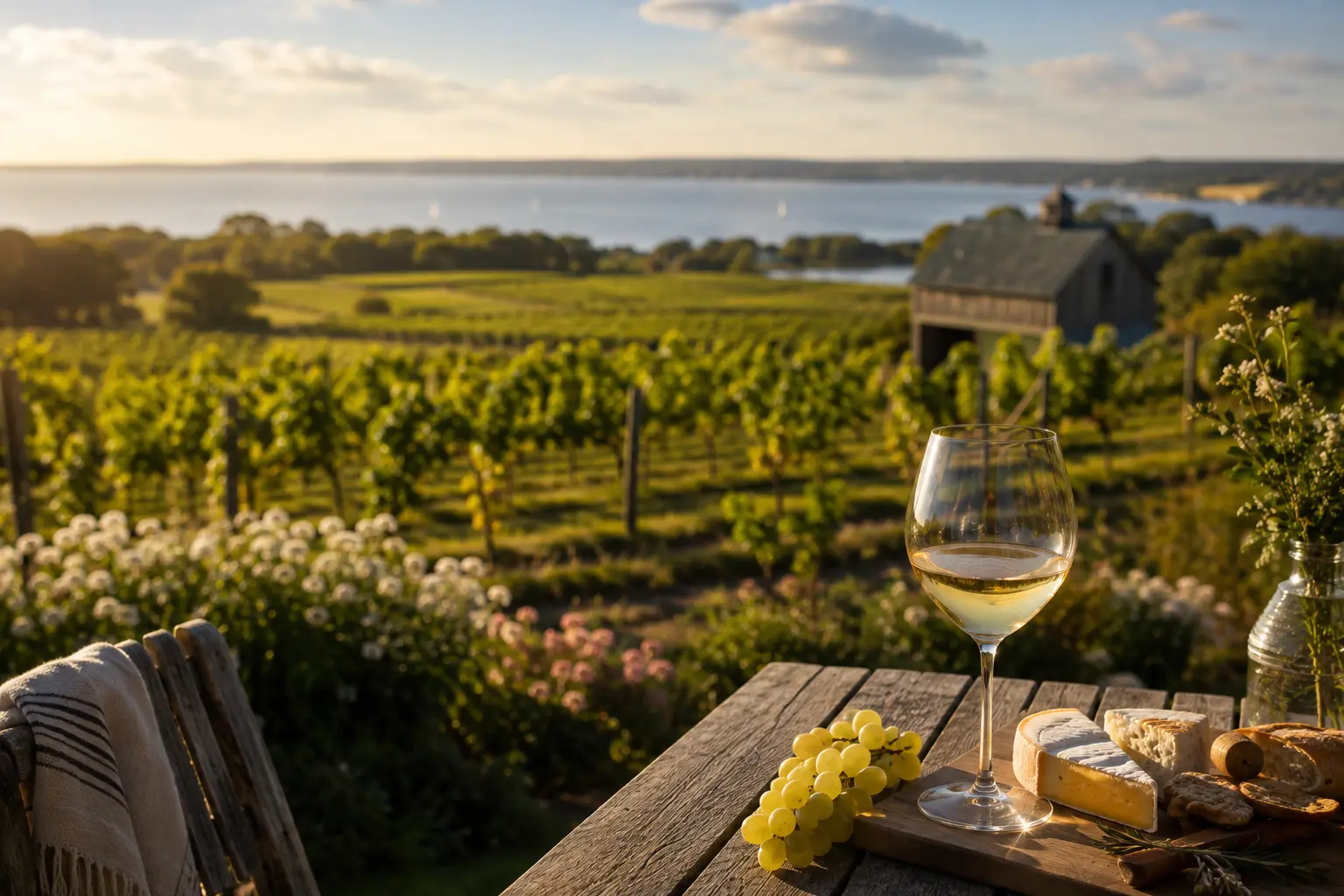

The North Fork of Long Island unfolds as a quiet counterpoint to its more famous southern neighbor. Its patchwork of vineyards, farm stands, and salt-worn harbors invites unhurried exploration. Visitors who arrive with a loose plan and a curious appetite tend to leave already thinking about their next return trip.
Sommaire
Getting to know the region
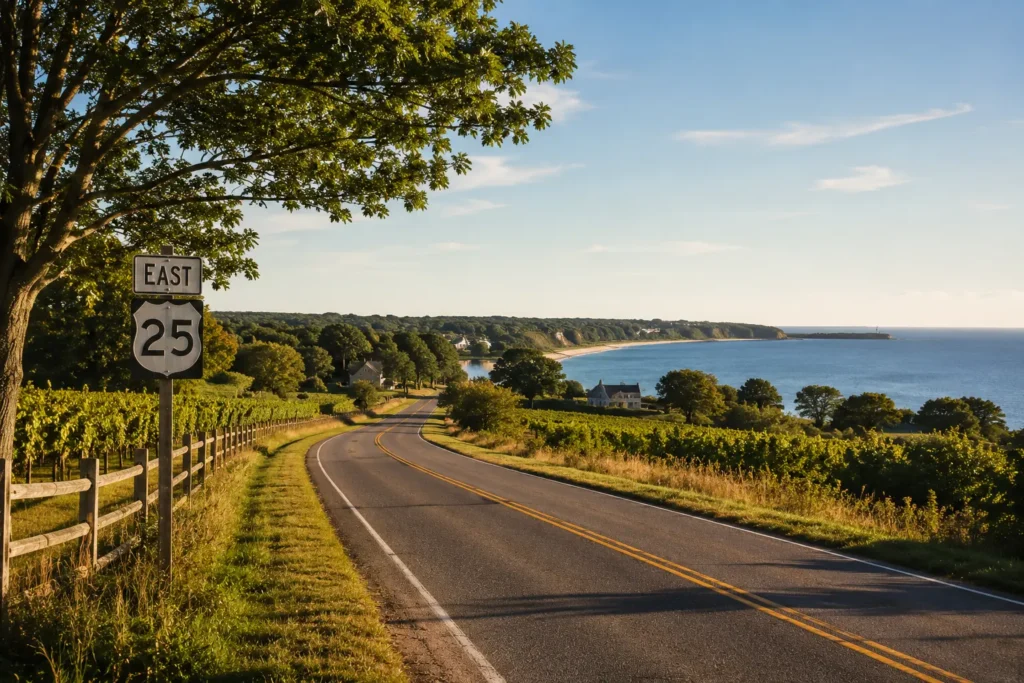
The peninsula stretches roughly thirty miles east from Riverhead, tapering toward Orient Point. Route 25 threads through the villages of Jamesport, Cutchogue, Peconic, and Southold, each with its own rhythm. Bay-side beaches sit within short drives of Sound-facing bluffs, giving the region a two-coasted feel.
Fall is the marquee season for foliage and the grape harvest, but late spring brings blossoms and quieter tasting rooms. Summer belongs to farm stands and produce markets, while winter offers a stripped-down version of the same landscape. Every season rewards a different pace of travel.
The pace shifts noticeably as you move east of Riverhead. Traffic thins, the sky opens, and the horizon starts to reveal itself in strips of water on either side. It is one of the few places within easy reach of a major city that still feels rural.
Where to stay for a wine-focused trip
Lodging on the peninsula skews small and independent, from converted farmhouses to purpose-built guest cottages tucked between rows of vines. Travelers focused on tastings often prefer to settle in a single hamlet and radiate outward, rather than change addresses each night.
Booking windows shift with the calendar. Fall foliage weekends fill first, followed by summer Saturdays and the shoulder weeks around holiday breaks. Traveling on off-peak dates often opens up the widest selection.
For groups planning a multi-day itinerary along Route 25, boutique stays near local vineyards can shorten the drive between visits and leave the designated driver with a shorter route home. Kitchens make a real difference too, since many afternoons naturally end with cheese, bread, and something bottled nearby.
Weekend availability tightens well ahead of high-season Saturdays, so booking early usually means better options and more flexibility on layout. Midweek stays generally cost less and pair well with tasting-room hours that lean toward quieter weekdays.
The tasting rooms worth planning around
The North Fork’s growing region is compact, and dozens of wineries operate within a short drive of one another. Rieslings, cabernet francs, and sparkling wines have long been the peninsula’s signatures, joined lately by orange wines and low-intervention labels.
Rather than racing between three or four rooms, most first-time visitors get more from two thoughtful stops. Look for producers offering guided flights or vineyard walks, especially on weekdays when the pace slows. Reservations are increasingly the norm, particularly during harvest weekends.
Harvest season, roughly from late August through October, is the peninsula at its most animated. Crush pads run into the evening, and many wineries add ticketed events, food pairings, and live music to their usual weekend calendars.
Beyond the vineyards
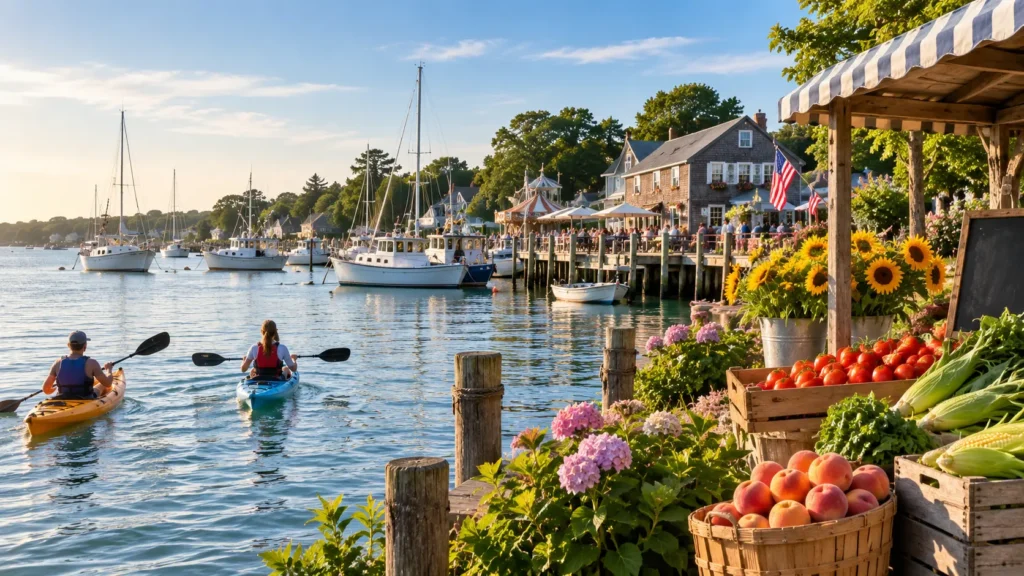
The North Fork’s appeal extends well past its rows of vines. Kayak outfitters launch from creeks near Southold and Greenport, and casual clam bars line the water along Peconic Bay. Cyclists appreciate the flat back roads that connect farm stands to the coast.
Greenport itself deserves at least an afternoon. Its harbor, antique carousel, and cluster of independent bookstores and cafes give the village an unhurried, working-waterfront character that lingers long after a trip ends.
Farm stands are a defining stop, especially in the peak of summer. Corn, tomatoes, peaches, and just-picked greens fill open-air tables from June into October, and honor-system boxes still handle payment at several of the smaller family operations.
Conclusion
The North Fork rewards visitors who resist the urge to schedule every hour. A morning at a tasting room, an afternoon on a beach, and an evening on a porch with local produce is often the itinerary that stays with people. Return trips have a way of writing themselves, usually with a slightly different route in mind and a shortlist of favorites already forming.
Whether you’re visiting for the first time or returning to discover a different season, the North Fork rewards a slower approach. Leave room in your itinerary for unexpected stops, conversations with local producers, and quiet moments overlooking the water. Those unscripted experiences often become the highlights of the trip, revealing the authentic character of this unique corner of Long Island far beyond its celebrated wineries.